washington d.c.
potomac and anacostia rivers, chesapeake bay watershed
The Chesapeake Bay is the largest estuary in the United States, fed by a watershed spanning 64,000 square miles across six states and Washington, D.C. which includes the Potomac and Anacostia rivers that run through this city. More than 18 million people live within the watershed, and the rivers draining into the Bay carry the cumulative impact of that population: agricultural runoff, stormwater pollution, nitrogen and phosphorus loading, and decades of industrial legacy.
The Potomac River, once described as a "national disgrace" due to severe pollution in the 1960s, has seen significant recovery. This is a testament to what coordinated policy, civic pressure, and cross-sector collaboration can achieve. American shad, osprey, and river herring have returned in measurable numbers. However, blue crab populations remain stressed, underwater grasses that anchor aquatic food webs have struggled to rebound, and the Anacostia — which runs through some of D.C.'s most historically underserved neighborhoods — continues to face elevated contaminant levels and combined sewer overflows during heavy rain events.
Restoration efforts span a wide range of levers from native oyster reef restoration to community-led stewardship programs in urban corridors and policy frameworks like the Chesapeake Clean Water Blueprint, a federally-backed plan requiring each watershed state to meet pollution reduction targets.
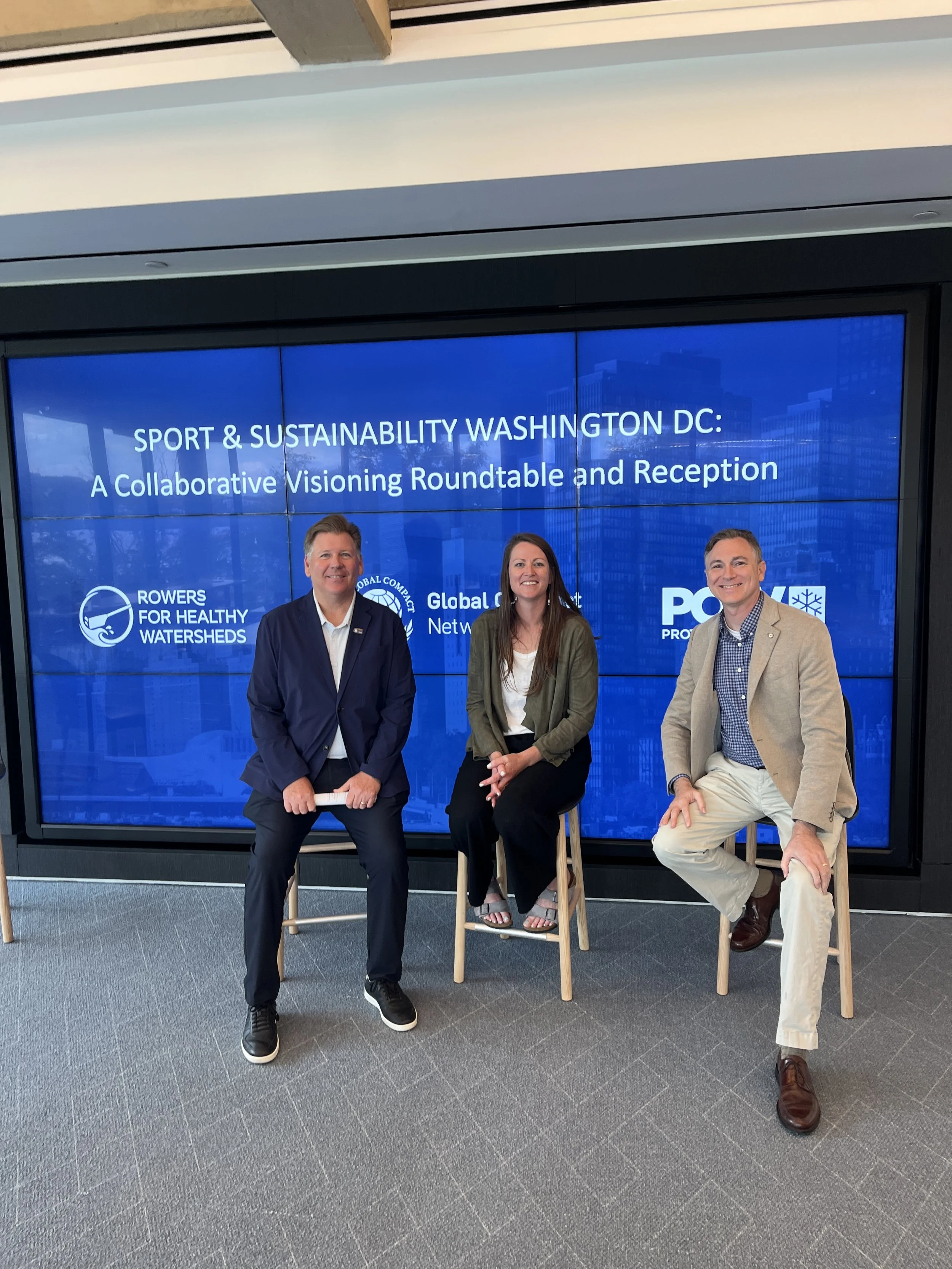
Our most recent work in Washington D.C. gathered leaders from companies, watershed organizations, and rowing clubs to discuss challenges and solutions to increasing recreation access for communities along the Potomac and Anacostia rivers. See the summary below and consider getting involved in our work.
Contact us if you’re based in the D.C. area and want to team up!